

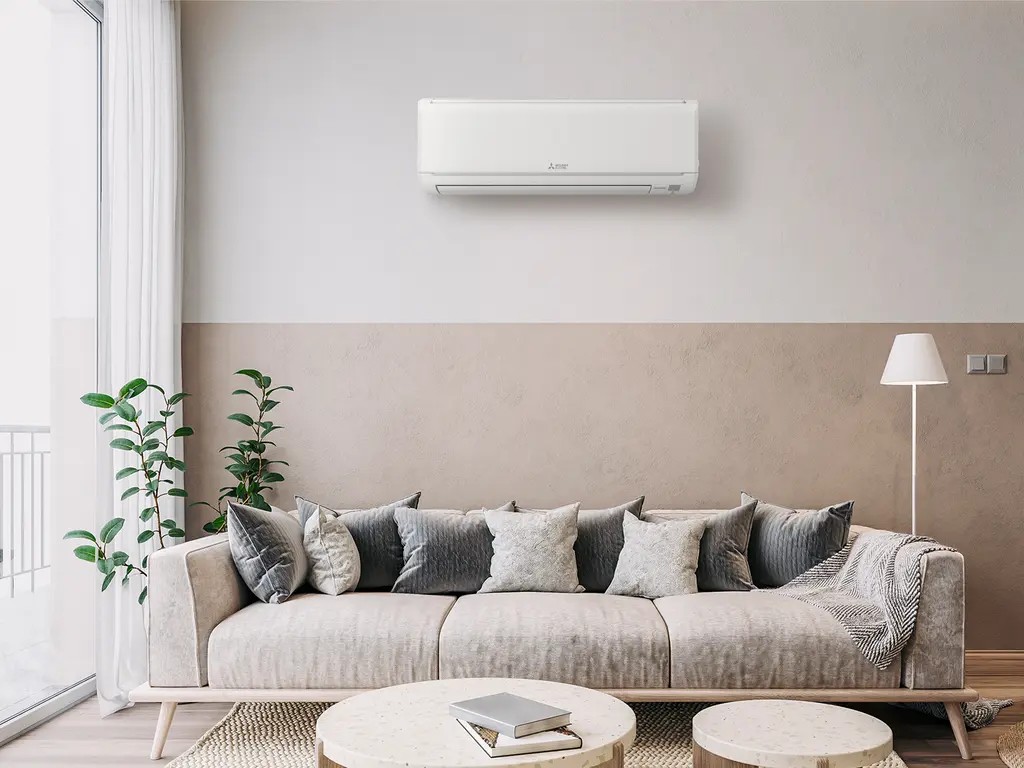
If you need to cool a room without existing ductwork, adding a traditional central air system may feel like more work than the space requires. A ductless mini-split can provide targeted heating and cooling without the need to install an extensive network of ducts, making it a practical option for additions, converted spaces, garages, and individual rooms.
A ductless system can also give you more control over where and when you use energy. Before choosing one, though, it helps to understand how the technology works, where it performs best, and what to consider during ductless mini split AC installation.
What Is a Ductless Mini-Split?
A ductless mini-split is an HVAC system made up of an outdoor condenser and one or more indoor air-handling units. Instead of sending conditioned air through ductwork, the indoor unit delivers cooled or heated air directly into the room.
The indoor and outdoor components connect through a small opening in the wall for refrigerant lines, electrical wiring, and condensate drainage. Because the system does not require large ducts, installation can be less disruptive than adding ductwork to an existing building.
Single-zone systems serve one indoor space, while multi-zone systems can connect several indoor units to one outdoor unit. This makes mini-splits adaptable to different layouts and comfort needs.
Why Choose a Ductless Mini-Split for a Room Without Ducts?
The biggest advantage is straightforward: you can condition a space without creating a duct system from scratch. That makes ductless technology especially useful in buildings where extending existing HVAC infrastructure would be difficult or impractical.
Common applications include:
● Home additions that were built without HVAC connections
● Finished basements or attics
● Converted garages
● Workshops and home offices
● Guest rooms or detached living spaces
● Older homes without existing ductwork
● Rooms that remain uncomfortable despite the home’s central HVAC system
Another benefit is zoning. Instead of conditioning an entire home to make one room comfortable, you can adjust the temperature in a specific area. Depending on the system and controls, different zones can have their own temperature settings.
How Does a Ductless System Work?
The outdoor unit contains the compressor and other components responsible for moving heat. During cooling, the system absorbs heat from indoor air and transfers it outside.
Inside the room, the air handler circulates conditioned air. A refrigerant line connects the indoor and outdoor units, allowing the system to transfer heat without relying on ductwork.
Many ductless mini-splits are heat pumps, which means they can provide heating as well as cooling. In heating mode, the system reverses the refrigeration cycle and moves available heat from outdoors into the building. This dual-purpose operation can make a mini-split useful throughout the year rather than only during hot weather.
Choosing the Right Size Matters
A mini-split should be sized for the space it needs to condition. Bigger is not automatically better. An oversized system can reach the thermostat setting quickly and cycle differently than intended, while an undersized unit may struggle to maintain a comfortable temperature during periods of extreme weather.
A proper sizing assessment should consider factors such as:
● Room dimensions and ceiling height
● Insulation levels
● Window size and orientation
● Sun exposure
● Number of occupants
● Heat-producing appliances and equipment
● Local climate
● The building’s overall construction
Professional load calculations can help determine the appropriate capacity instead of relying solely on the room’s square footage.
What to Consider Before Installation
The location of both the indoor and outdoor units affects performance, appearance, maintenance, and installation requirements. The indoor air handler needs a suitable wall location where air can circulate effectively throughout the room.
The outdoor unit also requires adequate clearance and a stable mounting surface. It should have enough space for airflow and servicing while being positioned appropriately for the property.
Drainage is another consideration. During cooling, indoor humidity can condense on the system’s coil and create water that needs to drain away properly. Installation should account for condensate management from the beginning.
Electrical requirements should also be evaluated before work starts. A qualified HVAC professional can determine whether the existing electrical setup is suitable and identify any necessary upgrades.
Common Mistakes to Avoid
A ductless system is relatively straightforward in concept, but poor planning can reduce its effectiveness. One common mistake is choosing equipment based only on the room’s size without considering insulation, windows, climate, and other heat-load factors.
Another is placing the indoor unit where furniture, walls, or other obstacles interfere with airflow. The outdoor unit can also suffer if it is installed in a cramped location with insufficient airflow.
It’s equally important not to treat installation as purely a matter of mounting equipment and connecting lines. Refrigerant connections, electrical work, drainage, system commissioning, and manufacturer requirements all need careful attention.
How to Get the Most From a Mini-Split
Once the system is installed correctly, simple maintenance can help keep it operating effectively. Indoor filters should be checked and cleaned according to the manufacturer’s recommendations, particularly in dusty environments or homes with frequent HVAC use.
Keep the area around the outdoor unit reasonably clear of leaves, debris, and other obstructions. Regular professional maintenance can also help identify issues before they become larger problems.
Using the system’s controls thoughtfully matters, too. If the room is unoccupied for long periods, adjusting the temperature rather than continuously maintaining an unnecessary setting may reduce energy use. Smart controls can make zoning and scheduling easier on compatible systems.
Is a Ductless Mini-Split Right for Your Space?
A ductless mini-split can be a strong solution when you need reliable room-by-room comfort but do not have ductwork available. It is particularly appealing for spaces where installing ducts would involve significant construction or where extending an existing central system does not make practical sense.
However, the best choice depends on the building, room characteristics, electrical setup, climate, and your heating and cooling requirements. Comparing the available options with a qualified HVAC professional can help you determine whether a single-zone or multi-zone system makes sense.
Conclusion
A ductless mini-split can be an excellent solution for cooling rooms that lack traditional HVAC ductwork. Whether you are upgrading an older home, finishing an attic or basement, adding a new room, converting a garage, or simply trying to improve comfort in one difficult-to-cool space, a ductless mini-split AC system offers targeted temperature control without the disruption of installing conventional ducts. However, choosing the right system involves more than selecting an appropriately sized unit.
Proper load calculations, strategic indoor and outdoor unit placement, adequate drainage, electrical considerations, refrigerant connections, and professional commissioning all influence system performance. With thoughtful planning and regular maintenance, a ductless mini-split can provide dependable, year-round comfort while giving homeowners greater control over individual spaces and heating and cooling needs.