

Healthy skin changes throughout life. Teenagers may struggle with persistent acne, adults can develop rashes or pigmentation concerns, and years of sun exposure may eventually lead to noticeable changes in skin tone, texture, and suspicious lesions. Hair and nails can also develop conditions that benefit from professional evaluation.
Access to professional dermatology in Buckeye gives individuals an opportunity to address these concerns with care based on their symptoms, medical history, lifestyle, skin characteristics, and personal goals. Rather than focusing exclusively on visible symptoms, comprehensive dermatologic care can involve diagnosis, treatment, prevention, patient education, and, when appropriate, cosmetic procedures.
For Arizona residents, this approach can be particularly valuable because abundant sunshine and a dry climate create everyday considerations for maintaining comfortable, healthy-looking skin.
What Does a Dermatologist Treat?
Dermatology is the medical specialty focused on conditions involving the skin, hair, and nails.
The skin is the body’s largest organ, and changes in its appearance or behavior can have many causes. Some concerns are temporary and relatively minor, while others are chronic or require prompt medical evaluation.
Common reasons people schedule dermatology appointments include:
- Acne and persistent breakouts
- Eczema and dermatitis
- Psoriasis
- Rosacea
- Unexplained rashes
- Itching and irritation
- Warts
- Skin growths
- Changes in moles
- Hair loss
- Nail abnormalities
- Sun-related skin changes
- Skin cancer concerns
Dermatologists can also provide guidance about preventive care and cosmetic concerns such as pigmentation, fine lines, uneven texture, or other visible signs of aging.
Why an Accurate Diagnosis Matters
Many skin conditions look similar.
A red, itchy area might be related to irritation, an allergic reaction, eczema, infection, or another condition. A dark spot could represent ordinary pigmentation, but some changing lesions require closer evaluation.
This is why self-diagnosis based solely on photographs or online descriptions can be unreliable.
During an appointment, a dermatologist can examine the affected area and ask questions about when symptoms began, how they have changed, what makes them better or worse, and what treatments have already been attempted.
In some cases, additional testing or a biopsy may be appropriate.
Identifying the underlying condition helps guide more targeted management.
Managing Acne at Different Ages
Acne is often associated with adolescence, but it can affect adults as well.
Breakouts can range from occasional clogged pores to persistent inflammatory or cystic acne. Hormonal influences, genetics, skincare products, medications, and other factors may contribute.
Treatment depends on the type and severity of acne.
A dermatologist may recommend topical therapies, oral medications, skincare modifications, or other approaches. Treatment plans often require time and may need adjustment based on response.
Addressing persistent acne can also help reduce the likelihood of long-term discoloration or scarring in some patients.
For people who already have acne scars, additional procedures may eventually be considered once active breakouts are appropriately controlled.
Eczema and Sensitive Skin
Eczema can cause dry, itchy, inflamed skin that may flare repeatedly.
Symptoms can interfere with sleep, comfort, work, and everyday activities, particularly when itching becomes persistent.
Management often involves more than applying medication during a flare.
A comprehensive approach may include identifying potential triggers, supporting the skin barrier, selecting appropriate moisturizers, modifying bathing or skincare habits, and using prescription treatment when necessary.
Because Arizona’s dry conditions can contribute to moisture loss, people with eczema or naturally dry skin may need to pay particular attention to maintaining the skin barrier.
Understanding Psoriasis
Psoriasis is a chronic immune-mediated condition that can produce thick, scaly, inflamed areas of skin.
The condition varies widely between individuals.
Some people develop limited patches, while others experience more extensive involvement. Psoriasis can also affect the nails, and some patients develop joint symptoms associated with psoriatic arthritis.
Treatment depends on severity, location, medical history, and other individual factors.
Options may include topical medications, light-based therapy, oral medications, or injectable treatments.
Because psoriasis can be a long-term condition, ongoing communication with a healthcare professional can help patients adjust management as symptoms change.
Evaluating Unexplained Rashes
Rashes are among the most common reasons people seek skin care, but “rash” is a broad description rather than a diagnosis.
Skin can become red, itchy, swollen, scaly, blistered, or irritated for many reasons.
Potential causes range from contact dermatitis and allergic reactions to infections, inflammatory conditions, and medication reactions.
The distribution of the rash can provide useful information.
A dermatologist may consider where it started, whether it is spreading, what symptoms accompany it, and whether the patient recently introduced new products, medications, foods, or environmental exposures.
Sudden or severe symptoms, particularly those accompanied by other concerning signs, may require prompt medical attention.
Rosacea and Persistent Facial Redness
Rosacea commonly affects the central face and can cause persistent redness, visible blood vessels, flushing, or acne-like bumps.
Triggers vary between individuals and may include sunlight, heat, certain foods or beverages, stress, and environmental conditions.
Management can involve identifying personal triggers, using gentle skincare, protecting the skin from sunlight, and considering prescription or procedural treatments when appropriate.
Because several conditions can resemble rosacea, professional evaluation can help distinguish it from acne, dermatitis, and other causes of facial redness.
Arizona Sunshine and Skin Health
Sun exposure is an important consideration for anyone living in Arizona.
Ultraviolet radiation contributes to premature skin aging and is an important risk factor for several forms of skin cancer.
Cumulative exposure may eventually become visible as:
- Uneven pigmentation
- Sunspots
- Fine lines
- Rough texture
- Loss of elasticity
- Other signs of photodamage
Sun protection should therefore be part of routine skin care rather than something reserved for vacations.
Broad-spectrum sunscreen, protective clothing, hats, shade, and sensible outdoor habits can help reduce unnecessary ultraviolet exposure.
The Importance of Skin Cancer Awareness
Skin cancer can develop in different forms, and appearances vary.
Patients should become familiar with their own skin so they are more likely to notice something new or changing.
Potential reasons to seek evaluation include a lesion that repeatedly bleeds, a sore that does not heal, a changing mole, a new growth, or a spot that appears noticeably different from others.
Not every unusual lesion is cancerous.
However, professional evaluation is preferable to guessing, particularly when a spot continues to evolve.
Understanding the ABCDEs of Melanoma Awareness
The ABCDE guideline is commonly used to help people recognize characteristics that may warrant professional evaluation.
A – Asymmetry: One side differs from the other.
B – Border: The edges appear irregular, uneven, or poorly defined.
C – Color: Multiple colors or noticeable changes in color may be present.
D – Diameter: Size can be relevant, although melanoma can also be small.
E – Evolving: The lesion changes in size, shape, color, or behavior.
These characteristics do not diagnose melanoma. They are simply awareness tools that can help people recognize when a professional examination may be appropriate.
Preventive Skin Examinations
Preventive dermatology is not limited to treating visible symptoms.
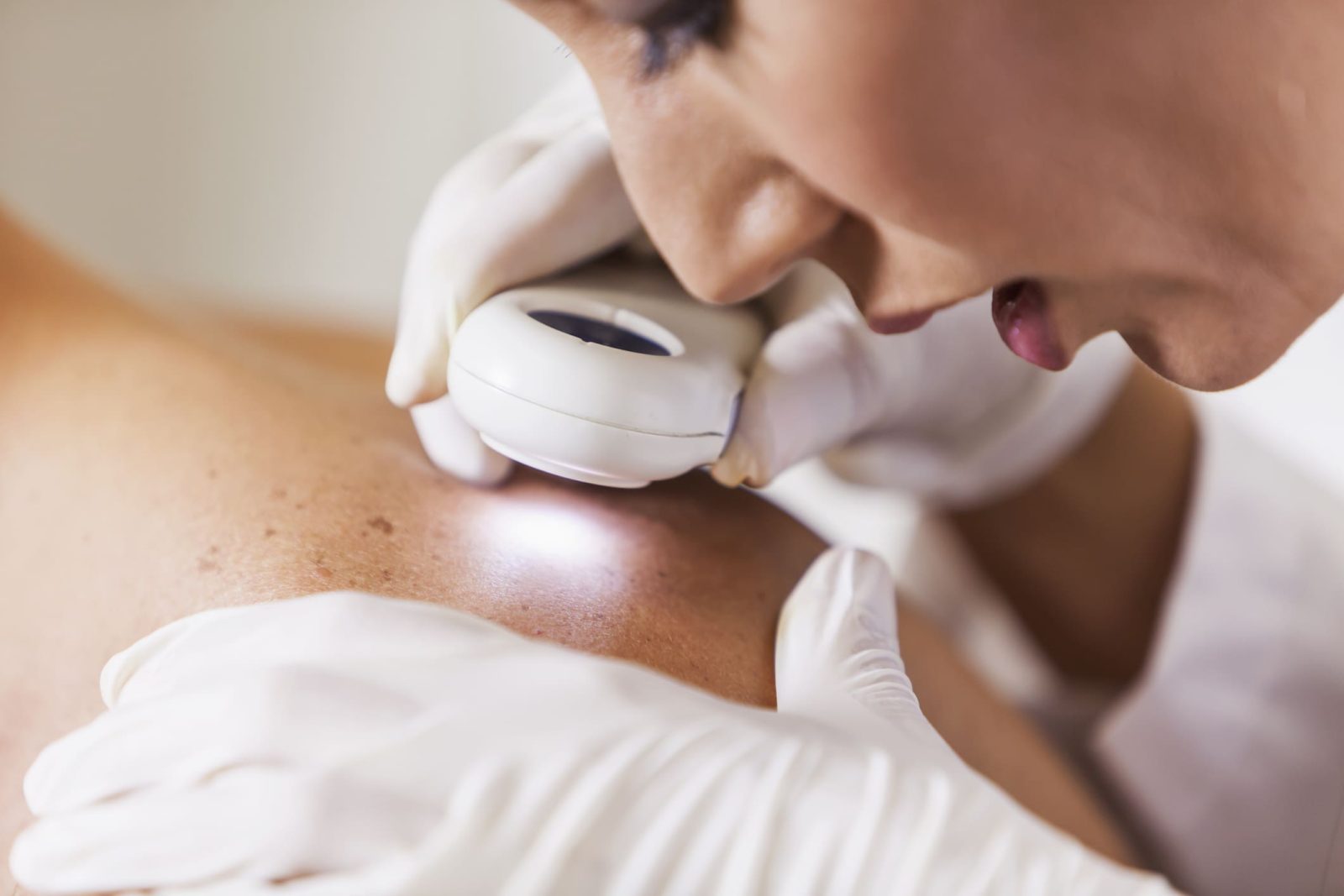
Skin examinations can provide an opportunity to evaluate lesions that patients may not easily see themselves, including areas of the scalp or back.
How frequently someone should receive professional examinations depends on individual risk.
A history of skin cancer, significant sun exposure, numerous or atypical moles, family history, immune status, and other factors may influence recommendations.
Patients can discuss their personal risk profile with a qualified healthcare professional to determine an appropriate approach.
Hair Concerns Are Part of Dermatology Too
Hair loss can have many possible causes.
Genetics, hormonal changes, illness, stress, nutritional factors, medications, inflammatory scalp conditions, and autoimmune disorders can all contribute.
Because the underlying cause matters, treatment should begin with evaluation rather than assuming that a popular supplement or topical product will solve the problem.
A dermatologist may examine the scalp, review the pattern of hair loss, ask about medical history, and determine whether additional testing is appropriate.
Earlier evaluation can sometimes be useful because certain forms of hair loss are more manageable when addressed promptly.
Nail Changes Can Provide Useful Clues
Nails can change in color, thickness, shape, or texture for many reasons.
Fungal infections are common, but they are not the only explanation for abnormal-looking nails.
Trauma, inflammatory conditions, medications, and other medical issues can sometimes produce similar changes.
Professional assessment can help identify the cause before treatment begins.
This can prevent people from spending months applying products for a condition they may not actually have.
Cosmetic Dermatology and Skin Rejuvenation
Dermatology can also include elective treatments designed to improve appearance.
Patients may seek professional guidance for concerns such as:
- Fine lines
- Wrinkles
- Uneven pigmentation
- Sun damage
- Facial redness
- Acne scars
- Uneven texture
- Loss of firmness
- Unwanted hair
Available options vary by practice and may include injectables, laser or light-based procedures, resurfacing treatments, microneedling, and other technologies.
A consultation should identify the concern before recommending a procedure.
Why Cosmetic Treatment Should Be Personalized
No single cosmetic procedure is ideal for everyone.
Skin tone, sensitivity, medical history, medications, previous treatments, degree of sun exposure, and desired results can all influence whether a procedure is appropriate.
Different concerns also require different solutions.
A treatment intended for pigmentation may not address expression lines. A procedure designed to improve texture may have limited effect on volume loss.
Personalized evaluation helps match the treatment to the actual concern instead of choosing a procedure simply because it is popular.
Setting Realistic Expectations
Cosmetic dermatology is generally about improvement rather than perfection.
Natural skin has pores, texture, lines, and variations in tone.
Before undergoing a procedure, patients should understand what it is intended to improve, how treatment feels, what downtime may occur, possible side effects, and when changes are likely to become visible.
Some procedures create relatively quick results, while others rely on gradual processes such as collagen remodeling.
Several sessions may also be recommended depending on the concern and technology.
Clear expectations can make the overall treatment experience more predictable.
Building a Practical Daily Skincare Routine
Healthy skin does not necessarily require a complicated collection of products.
For many people, a basic routine may begin with gentle cleansing, appropriate moisturizing, and consistent sun protection.
Additional ingredients can then be selected according to specific concerns.
Introducing too many active products simultaneously may cause irritation and make it difficult to identify which product is responsible.
A dermatologist can help patients simplify routines, particularly when they have acne, rosacea, eczema, sensitivity, or another condition that requires more careful product selection.
When to Schedule an Appointment
Some skin concerns can be monitored briefly, but others deserve professional evaluation.
Consider making an appointment when:
- A mole or spot is changing
- A lesion repeatedly bleeds
- A sore is not healing
- Acne is persistent or causing scars
- A rash continues or repeatedly returns
- Itching significantly affects daily life
- Hair loss becomes noticeable or sudden
- A nail changes without an obvious explanation
- A chronic condition is no longer responding to treatment
- You are considering a professional cosmetic procedure
Urgent or severe symptoms may require more immediate medical attention.
Preparing for a Dermatology Visit
Preparation can help patients get more value from an appointment.
Write down the main concerns and when they began. Bring a current medication list and information about treatments already attempted.
For symptoms that appear and disappear, photographs taken during a flare may provide useful context.
Patients considering cosmetic care can also think about their desired outcome.
Instead of requesting a specific device or procedure, describing the concern—such as uneven pigmentation or rough texture—allows the provider to discuss potentially appropriate options.
Building a Long-Term Relationship With Your Skin
Skin changes with age, environment, hormones, health, and lifestyle.
The care someone needs at 18 may look completely different from what they need at 40 or 65.
A teenager may initially seek help for acne. Years later, priorities could shift toward monitoring moles, managing rosacea, treating sun damage, or discussing age-related cosmetic concerns.
Long-term dermatologic care can adapt as those needs evolve.
Maintaining records of previous diagnoses, biopsies, treatments, and reactions can also provide useful context when new concerns arise.
Combining Treatment, Prevention, and Informed Care
Comprehensive dermatology encompasses much more than treating occasional breakouts or performing cosmetic procedures.
It can involve diagnosing chronic conditions, evaluating suspicious lesions, monitoring skin cancer risk, addressing hair and nail concerns, managing the effects of sun exposure, and helping patients make informed decisions about aesthetic treatments.
For people living in Buckeye and other Arizona communities, environmental factors make prevention especially relevant. Consistent sun protection, attention to new or changing lesions, and appropriate professional evaluation can all contribute to long-term skin health.
At the same time, everyday habits matter. Gentle skincare, adequate moisturization, avoiding unnecessary irritation, and choosing products suited to individual needs can complement professional care.
The most effective approach is personalized. Skin concerns can look similar while having very different causes, and treatments that work well for one person may not be suitable for another.
By combining medical evaluation, preventive awareness, realistic cosmetic goals, and consistent daily habits, individuals can take a more informed approach to caring for their skin throughout every stage of life.