

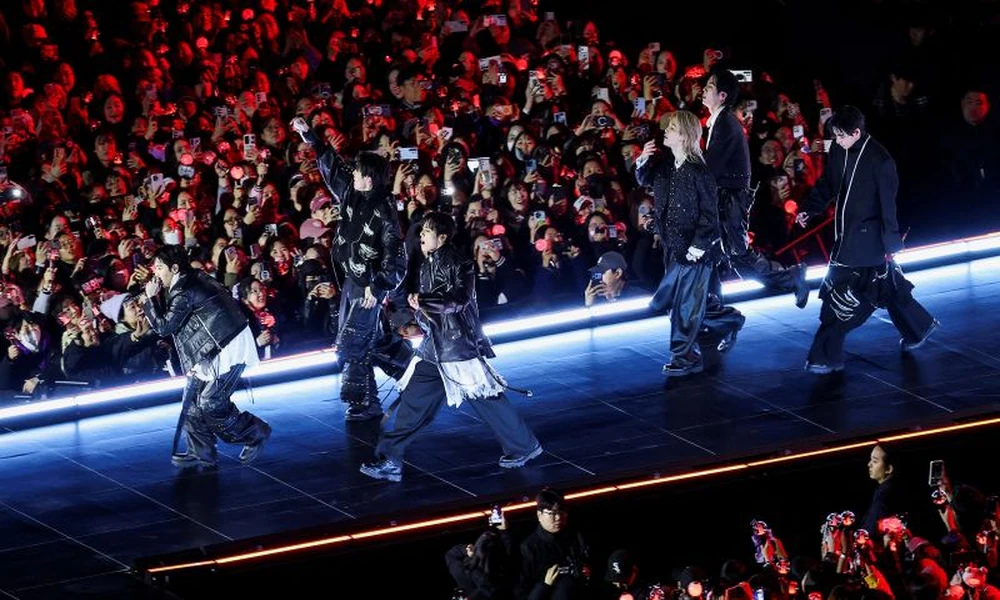
Walk into any K-pop arena, and you’ll see something that exists nowhere else in live music: a stadium full of coordinated, glowing objects, each one shaped differently, each one representing a distinct fan allegiance, all of them pulsing together in waves that move like water. Fans call it the ocean. Nobody designed that effect centrally. Fans built it themselves, over decades.
That story is stranger, more deliberate, and more technically sophisticated than most outsiders expect. Here’s how it actually happened.
The Problem With Being a Fan in 1992
When Seo Taiji and Boys debuted on a Korean talent show that year, K-pop as a category basically didn’t exist yet. What did exist was passionate young energy with no official outlet. Before lightsticks existed, fans expressed their support using colored balloons, and H.O.T. fans carried white balloons in the late 1990s, creating the first “balloon ocean” at concerts. Pink, yellow, sky blue – other first-generation groups followed with their own distinct colors, and this era established the core idea of K-pop fandom: each group has a distinct color that unites their supporters.
Balloons are fragile. They drift. They pop mid-performance. Fans wanted something better, something that could be owned, displayed, and upgraded.
The Four-Generation Framework: A Collector’s Lens
If you want to understand what you’re holding when you buy a modern lightstick, it helps to think in generations. This isn’t an official industry taxonomy, but it maps cleanly onto what happened technically and culturally over thirty years.
Generation 1 (late 1990s to early 2000s): Simple chemical glow sticks or single-color LEDs. No branding, no fandom color consistency, high breakage rate. Fans created their own version out of necessity.
Generation 2 (mid-2000s to early 2010s): Official branded units arrive. BigBang is credited for creating the first group-branded lightstick, the “BangBong,” in 2006. In 2007, TVXQ introduced their official lightstick shaped like a pearl-red balloon with a white strap, which became an instant hit, and other K-pop groups soon followed. These were still passive devices, no connectivity, but they were official, which mattered enormously for the ocean effect.
Generation 3 (2010s): Multi-color LEDs and rechargeable batteries. Groups started releasing version 2 or version 3 of the same lightstick model. Collectors began holding onto older versions while buying new ones.
Generation 4 (late 2010s to present): Modern K-pop lightsticks are marvels of concert technology. Third- and fourth-generation versions feature Bluetooth connectivity, allowing venue staff to control thousands of lightsticks simultaneously, creating breathtaking ocean-like waves of light that move in harmony with the music, transforming audiences into living light displays.
That fourth generation is where the engineering gets genuinely impressive. Each unit pairs with an app that links the device to a specific seat number, and because every unit is individually addressable, lighting operators can produce complex patterns and animations across the crowd with seat-level precision, making Bluetooth-controlled light sticks especially popular at K-pop concerts where coordinated “light oceans” are central to the show.
The Black Ocean Moment That Changed Everything
No single event proved the cultural weight of lightstick participation more clearly than what happened at the 2008 Dream Concert in Seoul. Fans of competing groups agreed in advance to turn off their lightsticks during Girls’ Generation’s performance, leaving the group performing in darkness while every other act received a glowing ocean of support. The coordinated blackout was called the Black Ocean, and it became one of the most discussed events in fandom history.
That incident reveals something important: the light ocean had become social currency. Showing up with the wrong lightstick, a knockoff with a slightly off color, was already a faux pas by then. The ocean was a point of pride and competition between fandoms, and fans whose ocean was particularly vivid and unified were seen as especially devoted, coordinating online before concerts to remind each other to bring official lightsticks, not knockoffs, so the color would be perfectly consistent.
You don’t accidentally create that level of coordinated participation. Fans engineered it, concert by concert, forum thread by forum thread.
Design Identity: Why Every Lightstick Looks Different
K-pop lightsticks, known as “paenbong” in Korean, have transcended their basic function as concert accessories, with each design telling a story and incorporating elements of the K-pop group’s identity, fandom name, and artistic concept. That’s why BTS’s ARMY Bomb represents the connection between the group and their fandom, ARMY, while BLACKPINK’s hammer-shaped lightstick reflects their powerful musical style.
The design language runs deep. Shape communicates group era. Color signals fandom membership. Even the name follows a formula: every lightstick has its own name with the word “bong” attached to it, since “bong” in Korean stands for stick, and groups attach a special word from their name to create the unit’s title. It’s branding, fandom identity, and product design compressed into a single handheld object.
For fans who collect across multiple groups, this is what makes K-pop lightsticks so appealing as a category: each one is genuinely distinct, not just a re-colored version of a generic template.
The Collector Economy Behind the Glow
Lightsticks have quietly built their own secondary market. Most groups release updated lightstick versions every few years, and fans who already own version 1 often buy version 2 while keeping the original as a collectible, with some fandoms now on their third or fourth version. Special editions released for specific tours or anniversaries become highly sought after, with a limited-edition ARMY Bomb from BTS’s Wembley Stadium concert commanding premium prices on resale markets.
The appetite for official merchandise is part of a far larger economic story. According to the Korean Foundation for International Cultural Exchange, exports of Hallyu-related products and services rose 5.1% in 2023 to reach USD 14.16 billion. Korea.net, the official website of the Republic of Korea, reported these figures in 2024, framing merchandise and consumer goods as a primary growth driver within that total.
That scale matters for fans trying to buy officially licensed pieces. When Hallyu exports are worth $14 billion, the supply chain for official goods has matured significantly, which means more genuine product reaching international fans and fewer quality issues in the secondary market.
How to Build Your Collection Without the Regrets
Buying lightsticks involves a few decisions that first-time collectors tend to get wrong. Here’s a practical way to think through it:
- Official version vs. special edition: Standard versions are easier to restock. Special editions tied to specific tours or anniversaries won’t come back. If a special edition matters to you, buy it when it drops, not six months later at resale prices.
- Bluetooth or non-Bluetooth: Not every lightstick model supports venue syncing. Check before you buy if you plan to use it at a concert rather than display it at home.
- Version awareness: Know which version you’re buying. Version 1 and Version 3 of the same group’s lightstick can look meaningfully different. Collectors often want both; casual fans usually want the most current.
- Display storage: Lithium batteries in stored lightsticks should be discharged to about 50% capacity before long-term storage to avoid swelling. Keep them upright, away from direct heat.
One underrated move for new collectors: start with the lightstick of the group you discovered most recently rather than the one you’ve loved longest. Your oldest fandom’s early versions may already be expensive resale items, while a newer group’s official lightstick is still widely available at original retail pricing.
The Wider Fandom Footprint
The lightstick’s reach inside fandom culture is hard to overstate. According to South Korea’s Ministry of Culture, Sports and Tourism, the number of global Hallyu fans reached approximately 225 million in 2023, a 24-fold increase compared to a decade earlier. The Korea Herald reported this figure in November 2024, citing the government’s own data on the scale of the Korean content industry’s global reach.
225 million fans is a lot of potential light oceans. What’s striking is that even a fraction of that audience actively purchasing official lightsticks represents a category of fandom merchandise that’s genuinely hard to find a parallel for anywhere else in pop music. Western artists hand out wristbands that die after the concert. K-pop fans buy an object they’ll still display on a shelf in 2035.
The ocean effect started with white balloons in the late 1990s. It took three decades of fan invention, competitive group identity, Bluetooth engineering, and genuine emotional investment to arrive at what fills arenas today. That’s not a marketing strategy. That’s culture building itself from the ground up.
“The sight of thousands of glowing lightsticks swaying in perfect synchronisation has become an integral part of the K-pop concert experience.”
– Tatler Asia, covering K-pop lightstick culture as a global phenomenon, 2025