

Introduction
Think of data science as a master sculptor. Instead of chiselling marble, it shapes raw fragments of numbers, images, and signals into meaningful patterns that resemble the world around us. Just as a sculptor envisions a face within a block of stone, data science helps us extract identities, behaviours, and insights from the unshaped mass of information. Among the most striking creations from this art form is face recognition powered by deep learning. It is no longer a futuristic dream but an everyday reality shaping security, convenience, and personalisation.
The Canvas: Why Faces Matter in Technology
Faces are the most personal of identifiers. Unlike passwords that can be forgotten or stolen, your face is inherently yours, carrying subtle patterns invisible to the casual observer. A modern smartphone that unlocks when you glance at it embodies how intimate this technology has become. But building such a system is not merely about recognising photographs; it is about teaching machines to interpret the brushstrokes of identity-lighting conditions, angles, age, even expressions-without mistaking one person for another.
The Brushes and Paints: Deep Learning Foundations
If data science is the sculptor, deep learning is the set of chisels and brushes that make the details possible. Neural networks, inspired by the human brain, allow machines to learn complex patterns by mimicking the way neurons interact. Convolutional Neural Networks (CNNs) in particular act like artists who zoom into fine features-the curve of a lip, the texture of skin, the distance between eyes.
Training such a network begins with feeding it thousands, sometimes millions, of labelled face images. Through repetition, the model learns to distinguish one identity from another, much like a painter gradually perfects a portrait by layering colour upon colour. Students pursuing a Data Science Course often begin with image classification projects before advancing to face recognition, as it represents the intersection of technical mastery and real-world application.
The Studio Process: Building the Recognition Pipeline
Creating a face recognition system is not a single stroke of genius but a sequence of deliberate steps.
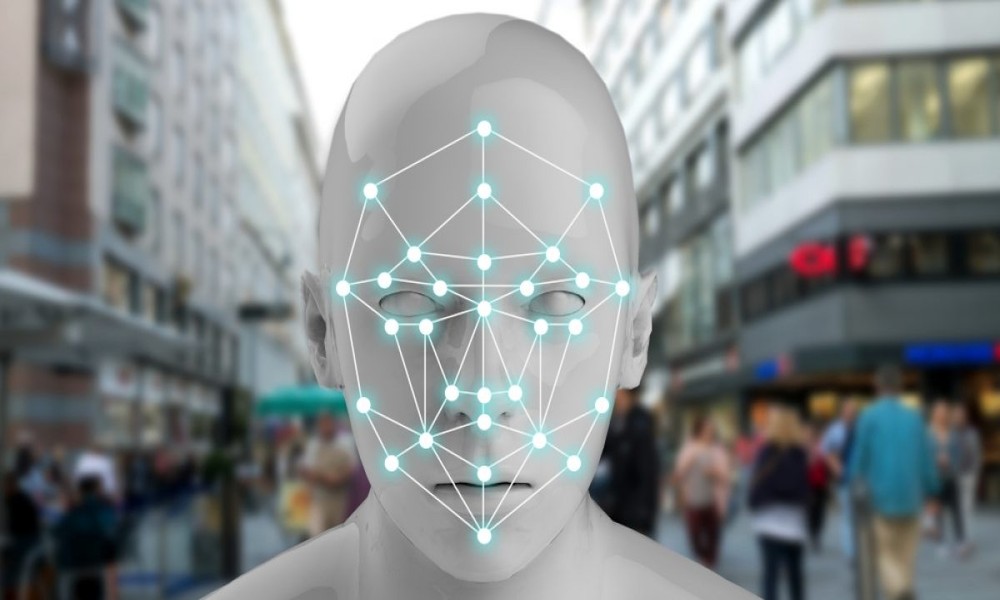
- Face Detection – The system first needs to find where the face is located in an image, like identifying the silhouette before sketching features. Algorithms such as Haar cascades or deep-learning detectors (like MTCNN) perform this task.
- Feature Extraction – Once a face is identified, the model extracts unique “embeddings”-numerical representations of distinguishing characteristics. Think of them as coordinates on an invisible map of identities.
- Comparison and Matching – The embeddings are compared against a database. If the distance between vectors is small enough, the system declares a match.
This pipeline is a symphony of mathematics and artistry. Each stage demands precision, because a false positive could mean unlocking the wrong phone, while a false negative could deny access to the rightful user.
Challenges: When the Portrait Gets Blurry
Like an artist painting under poor light, deep learning models often struggle when conditions are less than ideal. Changes in hairstyle, ageing, cultural attire, or even shadows can confuse recognition systems. Another challenge is bias in training datasets. If a system is trained predominantly on faces from a particular demographic, its performance across diverse populations may falter, raising ethical concerns.
To overcome these hurdles, practitioners apply data augmentation, fairness-aware algorithms, and continual retraining. This ensures the technology remains inclusive and accurate. For professionals advancing through a Data Science Course in Bangalore, grappling with these challenges is an essential step toward becoming not just a coder, but a responsible data scientist.
Beyond Security: Faces in Everyday Life
While the most obvious use of face recognition is in security and surveillance, the technology is seeping into unexpected areas. Retailers use it to personalise shopping experiences; healthcare systems employ it to monitor patient well-being; airports streamline boarding processes with a simple glance. Each application is another stroke on the grand canvas of data-driven living, blending convenience with responsibility.
In Bangalore, often called India’s Silicon Valley, innovation hubs are exploring how face recognition can merge with smart city initiatives. From traffic control to digital payments, the possibilities demonstrate how this sculpted technology can transform not just individual lives but entire urban ecosystems.
Conclusion
Building a face recognition system with deep learning is like crafting a masterpiece. It combines vision, technique, and responsibility in equal measure. From the chisels of convolutional networks to the ethical palette of fairness, every element contributes to shaping a tool that interprets one of humanity’s most unique assets-our faces. For learners entering the world of data, projects like these illustrate that a Data Science Course in Bangalore is not simply about algorithms, but about learning to sculpt intelligence that serves people meaningfully.
For more details visit us:
Name: ExcelR – Data Science, Generative AI, Artificial Intelligence Course in Bangalore
Address: Unit No. T-2 4th Floor, Raja Ikon Sy, No.89/1 Munnekolala, Village, Marathahalli – Sarjapur Outer Ring Rd, above Yes Bank, Marathahalli, Bengaluru, Karnataka 560037
Phone: 087929 28623
Email: enquiry@excelr.com