

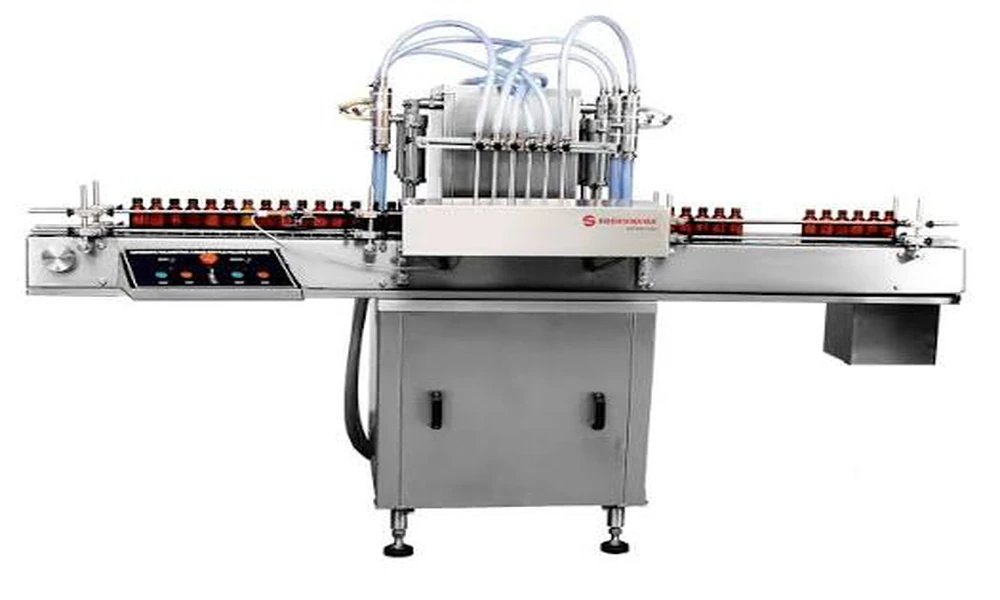
When businesses start looking at bottle filling equipment, price is usually the first question. Yet prices vary widely, from simple manual fillers to fully automatic lines. Understanding what drives bottle filling machine price differences helps businesses compare options fairly and choose equipment that matches their production needs. This article compares manual, semi-automatic and automatic options and explains what each offers for the money.
What Affects the Price
Several factors influence the price of a bottle filling machine. These include filling technology, number of filling heads, level of automation, materials of construction, accuracy, speed and additional features such as capping or labelling integration. Customisation for specific products or containers also affects cost. Comparing machines requires understanding these factors rather than looking at price alone. Stainless steel construction, required for many food and chemical products, also raises the cost compared with painted frames.
Manual Filling Machines
Manual fillers are the simplest and least expensive option. Operators control the fill by hand, using levers, valves or pumps. They suit small businesses, start-ups, pilot production and low-volume products. Manual machines are easy to use and maintain but rely heavily on operator skill. Output is limited, and fill consistency may vary. They are also useful as backup equipment or for small specialty batches on larger sites.
Semi-Automatic Filling Machines
Semi-automatic machines automate the filling process but require operators to place and remove bottles. The machine controls fill volume, improving consistency and speed compared with manual filling. Semi-automatic machines are popular with small and medium-sized businesses. They offer a balance between cost, accuracy and output, and they can often handle a range of bottle sizes. Many businesses find they cover most of their needs for several years before automation is needed.
Automatic Filling Machines
Automatic machines handle bottles continuously, often using conveyors to move bottles into position, fill them and move them on. They can integrate with capping, labelling and packing equipment to form a complete line. Automatic machines offer high output and consistency but cost significantly more. They suit businesses with high production volumes and stable product ranges. They also need more floor space and more technical support than simpler machines.
Comparing Output and Labour
Each option offers different output and labour requirements. A general comparison:
- Manual: low output, high labour per bottle
- Semi-automatic: moderate output, reduced labour
- Automatic: high output, minimal labour per bottle
- Integrated lines: highest output, coordinated operation
Labour savings can help justify higher investment in automation.
Accuracy and Consistency
Accuracy affects product giveaway and compliance with declared quantities. Manual filling depends on operator skill, while semi-automatic and automatic machines provide more consistent fills. Higher accuracy reduces waste and improves product quality. When comparing bottle filling machine price options, consider the cost of product giveaway over time, not just the machine price. For a product sold in large volumes, a small improvement in accuracy can pay for a machine upgrade surprisingly quickly.
Product and Container Considerations
The type of product and bottle affects which machine is suitable. Thin liquids may suit gravity or overflow fillers, while viscous products need piston or pump fillers. Bottle shapes and sizes affect handling and changeovers. Machines designed for specific products may cost more but perform better. Ask suppliers to quote for all the bottle sizes you plan to run.
Hidden Costs to Consider
The purchase price is only one part of the investment. Additional costs may include:
- Installation and commissioning
- Training
- Spare parts and maintenance
- Changeover parts for different bottles
- Utilities such as compressed air
Considering these costs gives a clearer picture of total investment.
Return on Investment
Return on investment depends on labour savings, reduced giveaway, increased output and improved quality. Businesses can estimate payback by comparing current costs with expected performance. A higher-priced automatic machine may pay for itself quickly in high-volume operations, while semi-automatic machines often provide the best return for smaller businesses. Improved consistency can also reduce customer complaints and returns. Even rough estimates give a useful starting point.
Planning for Future Growth
Businesses should consider future production needs when choosing a machine. A semi-automatic machine may suit current volumes, but growth may require automation later. Some machines can be upgraded, while others may need replacing. Planning ahead helps avoid outgrowing equipment too quickly. Leaving floor space for a capper or labeller next to the filler makes later expansion easier.
Leasing and Financing Options
Not every business needs to buy equipment outright. Some suppliers and financing companies offer leasing or instalment arrangements that spread the cost over time. This can make semi-automatic or automatic machines accessible earlier, with savings in labour and giveaway helping to cover the payments. Compare the total cost of financing with the expected benefits, and check what happens to maintenance responsibility during the lease.
Making an Informed Choice
Comparing manual, semi-automatic and automatic options requires considering price, output, accuracy, labour and future needs. Working with an experienced supplier helps clarify options. For businesses considering automation, a supplier of inline automatic bottle fillers can provide quotes and advice suited to your production volumes. Requesting quotes for two levels of automation often clarifies which option fits best.