

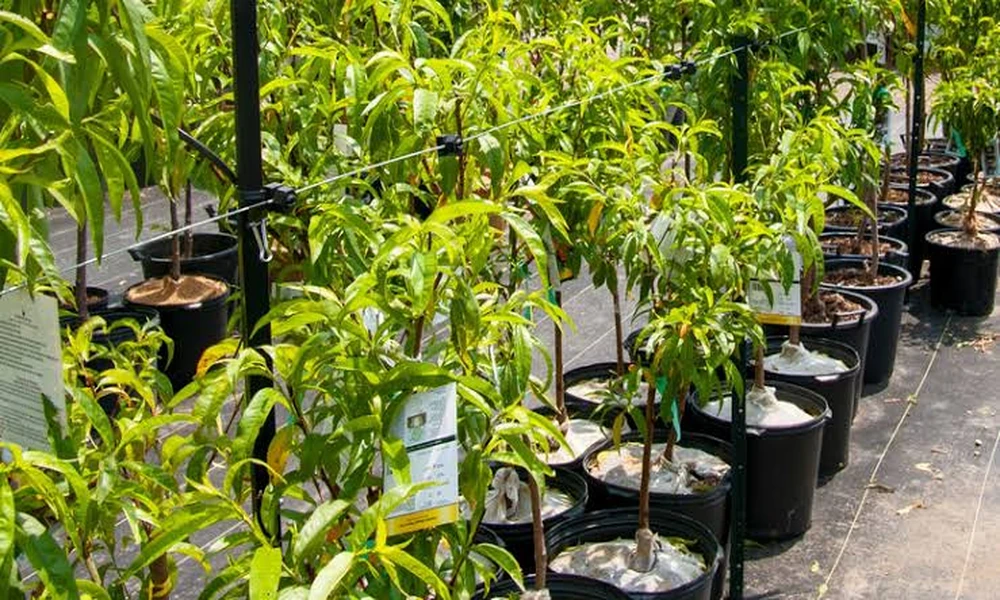
A peach tree outdoors and one under glass experience different advantages, but neither position is effortless. An open sunny wall offers natural rainfall, airflow, and pollinator access while exposing early blossom to frost and leaf curl infection. A greenhouse or polytunnel protects from rain and cold yet places watering, ventilation, and pollination in the gardener’s hands.
The stronger choice depends on local shelter, available structures, training space, and the attention that can be provided in spring. Protection is valuable only when the routine created by that protection remains realistic.
A comparison should begin with the most limiting weeks rather than with average summer warmth. Blossom opens early, leaf curl pressure rises during cool wet conditions, and protected structures heat quickly when the sun returns. Gardeners should map frost pockets, rain exposure, pollinator access, water supply, ventilation, and the wall or framework available for training before choosing a system. They should also decide who opens vents, hand-pollinates blossom, and checks compost or border moisture during changeable spring weather. Those duties belong beside cultivar and final size, not in an afterthought, and they should be agreed before the structure determines the planting position. A covered system also concentrates responsibility during bright spring days, when temperature changes faster than an outdoor forecast suggests. Water supply, vent access, and the distance between foliage and glazing should therefore be tested as parts of one routine. If that routine depends on daily attention, the gardener needs a practical arrangement for weekends away and sudden warm spells before committing the tree to the structure. When reviewing peach trees for sale, a fruit-tree specialist from ChrisBowers explains that cover shifts risk rather than removing it: less rain on young foliage brings more responsibility for irrigation and temperature control. The specialist advises choosing the position whose critical tasks fit the household routine, because consistent attention through blossom and early growth matters more than an impressive structure that is rarely managed.
The comparison is clearest when the season is divided into pressure points. Blossom survival, pollination, leaf health, summer temperature, water, pruning access, and harvest each produce a different balance between outdoor exposure and protected control.
Compare the Coldest Blossom Mornings
Peach blossom opens when clear nights can still produce frost, and a warm wall or covered space changes both timing and exposure; the visible detail is therefore linked to the process behind it before tools or materials enter the discussion.
The long view of protected peach growing separates permanent choices from seasonal responses; within protected peach growing, position and structure deserve caution, while small adjustments remain available as growth, crop weight, and ordinary weather test the original plan.
British spring temperatures vary over a few metres where walls, slopes, paving, and trapped cold air create distinct microclimates; short weather windows reward preparation, but they do not justify work when the tree or ground is unsuitable.
Problems become harder to interpret after assuming a greenhouse is frost-free or using heavy cover that remains around blossom during warm pollinator-active hours; the apparent solution therefore creates a second problem beside the one it was meant to address.
A proportionate response is to record minimum temperatures at the proposed position, identify frost pockets, and plan temporary protection that can be removed by day; the action has a defined purpose, a visible review point, and a sensible reason to stop.
Use a maximum-minimum thermometer and compare the site with an open reference point through the weeks around expected bloom; attaching the check to a familiar route makes subtle change more likely to be noticed during a busy week.
Blossom protection is based on measured local risk and does not accidentally create overheating or exclude pollinators; future work begins from a sounder structure, clearer evidence, and fewer inherited maintenance problems.
Balance Rain Exclusion Against Ventilation
Keeping spring rain from emerging leaves can reduce leaf curl pressure, but closed structures also retain humidity and warm rapidly in sunshine; this gives the later decision a clear baseline instead of relying on one attractive or alarming moment.
Rain is excluded when useful while leaves still receive air movement and temperatures stay within a manageable range; the result is understandable to another gardener and does not depend on unusually favourable conditions.
Rapid swings from dull to sunny weather make ventilation a daily spring task in many UK greenhouses and polytunnels; the same nominal month can describe very different plant conditions between a sheltered town garden and an exposed plot.
Good judgement in protected peach growing comes from several modest signals rather than one dramatic clue; for protected peach growing, soil, access, growth, weather, and timing should support the same explanation before an intervention becomes larger or difficult to reverse.
The most misleading response is treating cover as passive protection and leaving doors shut through bright days after a cold, wet night; the tree loses useful options while the gardener gains little dependable information in return.
Place thermometers at canopy height, inspect for condensation, and ensure vents operate before the tree enters active growth; keeping the inspection reachable ensures that good intentions survive wet days, holidays, and competing tasks.
The next deliberate move is to provide controllable vents and enough space around trained growth, opening the structure according to temperature and condensation; the sequence makes follow-up straightforward and leaves the cause of any improvement easier to identify.
Plan Pollination Inside and Outside
Outdoor blossom receives natural insect visits when weather is suitable, whereas enclosed blossom often needs deliberate access or hand pollination; the first conclusion remains deliberately modest, leaving enough evidence for a proportionate response.
Progress depends on choosing to open doors during safe weather and transfer pollen gently between newly open flowers when insect activity inside remains limited; the action has a defined purpose, a visible review point, and a sensible reason to stop.
A useful margin is part of protected peach growing, not wasted effort; in protected peach growing, it allows for a heavier crop, a drier month, or a missed inspection and keeps correction possible without dismantling work that is already performing well.
Cool windy weather restricts outdoor insects, while a sunny protected space may become active earlier but remain physically closed; aspect, shelter, soil, and recent rainfall need to be read together before the timing is judged.
Repeat checks through peak bloom, use a clean soft brush, and avoid spraying or watering directly over open flowers; attaching the check to a familiar route makes subtle change more likely to be noticed during a busy week.
The shortcut to avoid is hand-pollinating once at the beginning of bloom, despite flowers opening over several days and pollen conditions changing; resisting the assumption keeps observation, intervention, and outcome connected in the right order.
The chosen structure supports reliable pollen transfer rather than protecting blossom so completely that fertilisation is overlooked; this protects the original purpose of the planting while leaving room for small later adjustments.
Make Watering Match Root Volume and Heat
A covered border misses rainfall and a container holds limited reserves, while outdoor soil receives rain that may still fail to wet active roots evenly; this turns a broad instruction into a condition that can be checked again after growth or weather changes.
Taken together, this part of protected peach growing links timing with plant response and access; within protected peach growing, the aim is not a flawless appearance, but a result stable enough to observe and modest enough to correct if later evidence changes the judgement.
Steady moisture supports leaf health and fruit development without replacing one outdoor uncertainty with erratic protected irrigation; the benefit remains visible after the immediate concern has passed and routine care resumes.
Provide a visible watering route, mulch without touching the trunk, and confirm that surplus water drains rather than collecting; keeping the inspection reachable ensures that good intentions survive wet days, holidays, and competing tasks.
The sound intervention is to check moisture at depth, water thoroughly across the root zone, and adjust frequency to temperature, crop load, and drainage; the sequence makes follow-up straightforward and leaves the cause of any improvement easier to identify.
Polytunnels and glasshouses can become hot during brief British sunny spells even when outdoor air remains moderate; a review after the next meaningful spell of weather is more useful than treating the whole season as uniform.
The assumption that deserves resistance is following a fixed daily schedule that waterlogs cool compost in spring and under-supplies the tree during hot fruit swelling; the apparent solution therefore creates a second problem beside the one it was meant to address.
Fit Training and Pruning Into the Structure
Peaches need light, renewal wood, and reachable branches, so walls, roofs, doors, gutters, and paths define the usable framework; read in sequence, the observation keeps cause and symptom from being folded into the same assumption.
Install durable support before planting and leave enough distance from glass or plastic for airflow, tying, and careful inspection; attaching the check to a familiar route makes subtle change more likely to be noticed during a busy week.
The final choice among peach trees for sale should follow the selected growing system, available training dimensions, and the cultivar’s suitability for the local season.
Later correction is often created by planting centrally in a small structure and discovering later that branches block ventilation, doors, or the route used for watering; the tree loses useful options while the gardener gains little dependable information in return.
A useful course of action is to draw the mature fan or chosen form to scale, including access for summer pruning and the outward reach of laden shoots; the action has a defined purpose, a visible review point, and a sensible reason to stop.
Limited winter light and low roof edges make apparently generous structures feel smaller once leaves and fruit occupy them; local observation should therefore carry more weight than a date copied unchanged from a national calendar.
There is also a household test for protected peach growing: the arrangement has to work on wet days, during harvest pressure, and when a routine check is delayed; a protected peach growing plan that survives only an ideal weekend is not yet a practical one.
The tree fills an intentional plane where productive young wood can be renewed without fighting the building around it; the outcome supports the current season without borrowing strength, access, or flexibility from the next one.
Choose the Risk and Routine You Can Manage
Outdoor growing accepts more weather exposure, while protected growing exchanges part of that exposure for repeated decisions about vents, water, and access; its value lies in separating what the gardener sees now from what still needs to be confirmed.
Identify a backup carer, use simple temperature and moisture records, and review the system after the first complete season; keeping the inspection reachable ensures that good intentions survive wet days, holidays, and competing tasks.
The decision becomes workable when gardeners list the critical weekly tasks from blossom to harvest and select the system that still works during holidays and busy periods; the sequence makes follow-up straightforward and leaves the cause of any improvement easier to identify.
Across a complete season, protected peach growing moves from preparation to observation and then to review; in protected peach growing, keeping those stages distinct prevents every new symptom from reopening the entire decision and helps each action answer a question established beforehand.
The avoidable weakness in the plan is choosing cover solely for the promise of warmth or choosing outdoors solely to avoid work, since both positions require timely attention; resisting the assumption keeps observation, intervention, and outcome connected in the right order.
Site, structure, cultivar, and household routine form one credible plan rather than a collection of individually attractive features; the tree, site, and household routine finish in better agreement than a short-term cosmetic answer provides.
Local rainfall, frost, wind, summer heat, and available shelter differ too widely for one method to suit every British garden; the decision belongs to the actual site, where ordinary variation is part of the evidence rather than an inconvenience.
The first complete season should end with a comparison of labour as well as fruit. Record frost protection, pollination visits, watering, vent changes, leaf health, pruning access, harvest dates, and any period when care was difficult to provide. The figures need not be elaborate; their purpose is to show which system concentrated work at awkward moments. That evidence supports a thoughtful adjustment to cover, training, or routine and prevents a single ripe peach from concealing a growing method that the household cannot repeat reliably.