

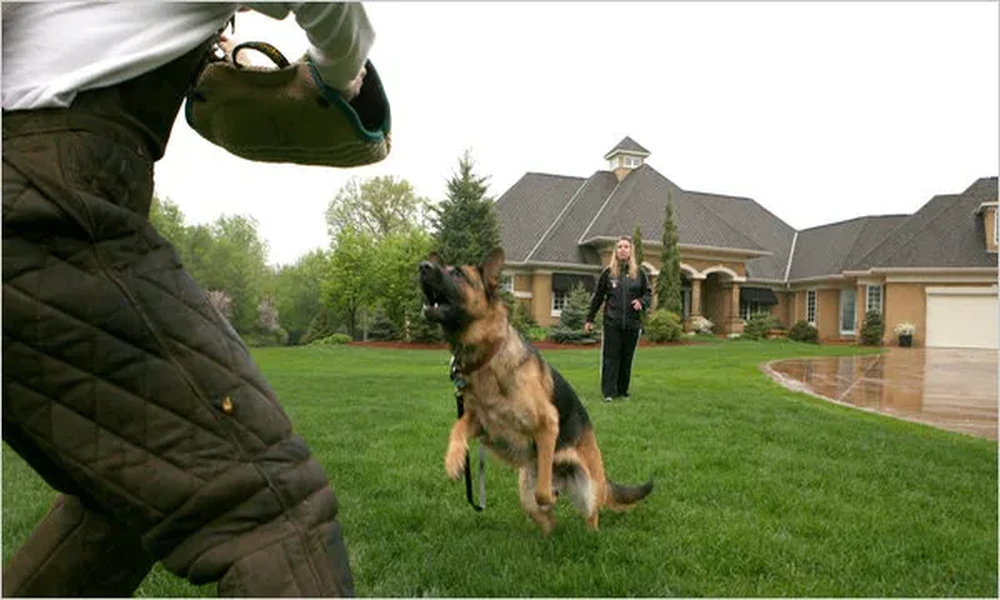
Finding a trained german shepherd for sale is very different from buying a puppy or a dog with basic obedience training. A fully trained German Shepherd for sale is an adult dog that has already completed advanced obedience, controlled protection training, socialization, and training in different real-life settings. Instead of starting the training process yourself, you receive a dog that has already been prepared to live and work in a home. Scott’s K9 focuses on placing trained German Shepherds with families, executives, and security professionals based on their needs, home environment, and daily routine.
Understanding a Fully Trained German Shepherd
What Does “Fully Trained” Really Mean?
A fully trained German Shepherd is more than a dog that knows how to sit, stay, or walk on a leash. The dog has gone through a complete training program that prepares it for daily life with its new handler.
This can include advanced off-leash obedience, controlled protection work, socialization, exposure to different places, and training around normal household activity. The goal is to create a dog that can respond to its handler while remaining calm in situations that do not require a protective response.
This is also why buyers should ask exactly what a seller means when they say a dog is “trained.” The term can describe very different levels of preparation.
A puppy may have little or no formal training. A started dog may know basic obedience and have begun protection work but still need a lot of training. An obedience-trained dog may be very well behaved but have no protection training. A fully trained protection dog has completed the training needed for its intended role and is prepared for a formal transfer to its new handler.
Different Roles for a Trained German Shepherd
A trained German Shepherd can be placed in different types of homes and situations. Some owners mainly want a highly obedient companion with a strong presence. Others need a dog trained for home and family protection. Executives and security professionals may need a dog that can also travel, work around other people, and fit into a demanding schedule.
The right dog depends on the owner’s needs. A dog that works well for one household may not be the right match for another. This is why a proper consultation is important before a placement is made.
At Scott’s K9, each dog is trained to a high standard and then matched to the person or family that will handle it. The placement is not simply about choosing the biggest or strongest dog. It is about finding a dog whose training, temperament, and working ability fit the household.
Where the German Shepherd Came From
The German Shepherd was developed in Germany in the late 1800s as a working dog. The breed was created with a focus on useful traits such as intelligence, strength, structure, and the ability to work with people.
Captain Max von Stephanitz played a major role in the development of the breed. In 1899, he purchased a dog named Hektor Linksrhein at a dog show and renamed him Horand von Grafrath. Horand became the first German Shepherd entered into the breed’s official studbook.
Von Stephanitz and others worked to create a dog that could perform useful tasks rather than simply look good. The German Shepherd was first used for herding and other farm work. As the need for herding dogs changed, the breed became widely used for police, military, search, detection, and protection work.
That working background is still important today. German Shepherds continue to be used in many jobs because they can learn complex commands and work closely with their handlers.
Working Line vs. Show Line German Shepherds
Not every German Shepherd is bred for the same purpose. Buyers looking for a protection dog should understand the difference between working lines and show lines.
Working line German Shepherds are bred with working ability in mind. Breeders look at traits such as drive, nerve, structure, health, and the ability to perform under pressure. These dogs may come from lines that have been tested through working sports, police work, or other tasks.
Show line German Shepherds are mainly bred to meet a specific appearance standard. This does not mean that show line dogs are bad dogs. They can make excellent pets and family dogs. However, they may not have been bred with the same focus on protection work.
Working tests and systems such as IGP can provide useful information about a dog’s abilities and background. However, a title or test alone does not guarantee that a dog will be the right protection dog for a particular home. Training, temperament, health, and the dog’s ability to work with its handler all matter.
Why Choose a Trained German Shepherd From Scott’s K9?
Experience Behind the Training
Scott’s K9 is a veteran-owned protection dog company led by Steve Scott. According to the company, Steve is a US Army veteran, former head trainer of a police department K9 unit, and a certified Police K9 Master Trainer and Certifying Official.
The company has worked with European working line dogs for more than 20 years. Instead of handling a large number of dogs, Scott’s K9 keeps its yearly placement numbers limited. The company states that it places about 24 dogs per year, with only a small number normally available at one time.
This limited number allows the training and placement process to stay personal. Buyers work directly with the trainer during the matching process instead of simply choosing a dog from a large list.
European Working Line Sourcing
The starting point for a protection dog is the dog itself. Training cannot completely change a dog’s natural temperament or working ability, which is why careful selection is important.
Scott’s K9 works with European working line programs and selects dogs based on traits such as temperament, nerve, health, structure, and working ability. Medical records and health information are provided with the dog.
A good protection dog should be able to work when needed but also settle when there is no reason to react. This balance is especially important for dogs that will live with families.
Training for Real-Life Situations
Protection training should not only happen in a controlled training area. A dog that will live in a home needs to understand normal household life as well.
Training may include work around homes, vehicles, elevators, crowds, public places, and other everyday environments. The dog also needs to understand when it is time to work and when it is time to relax.
This ability to settle is an important part of having a protection dog in a family home. A dog that reacts to every person, noise, or movement can become difficult to manage. Proper training teaches the dog to follow its handler and respond when there is a real reason to do so.
Why German Shepherds Work Well as Protection Dogs
German Shepherds are popular for protection work because they combine several useful traits. They are intelligent, athletic, trainable, and naturally aware of what is happening around them.
Their ability to work closely with a handler is another major advantage. A protection dog needs to understand commands and follow direction instead of making decisions without control.
Their size and presence can also make them a strong visual deterrent. However, no dog can guarantee that a person or property will never be threatened. A trained dog is one part of a larger home security plan, not a replacement for responsible security measures.
German Shepherds can also adapt well to family life when they receive the right training and structure. They can live in the home, spend time with family members, and still perform their trained role when needed.
German Shepherd vs. Belgian Malinois
People shopping for protection dogs often compare the German Shepherd with the Belgian Malinois. Both breeds can be highly capable working dogs, but their traits and energy levels can differ.
German Shepherds are often chosen by people who want a balance between working ability, family life, and a strong presence. Belgian Malinois can have very high energy and strong working drive, which may be better suited to handlers who can provide a very active lifestyle and regular work.
The important point is not simply choosing a breed. The individual dog’s temperament, training, experience, and match with the handler all need to be considered.
Personal Delivery and Handler Training
Receiving a fully trained dog is only the beginning of the owner’s responsibility. The handler needs to understand the dog’s commands, daily routine, behavior, and training.
Scott’s K9 personally delivers its dogs rather than shipping them. The delivery includes in-home handler instruction so the owner can learn how to work with the dog in the environment where it will actually live.
The company states that its delivery includes a two-day handler course covering commands, handling, household routines, and integration with children and existing pets.
This step is important because even a highly trained dog needs consistency. The owner has to understand how to maintain the dog’s training after the original trainer leaves.
Health, Training Records, and Continued Support
A serious buyer should ask for clear information about the dog’s health and training history before making a purchase. Medical records, health checks, training records, and information about the dog’s background can help the buyer understand exactly what they are receiving.
Scott’s K9 states that its placements include a one-year health guarantee and a 90-day performance guarantee. The company also provides training documentation, including video showing the dog’s trained behaviors.
The company also states that owners can continue to contact the trainer for support after placement. This can be useful when an owner has questions about handling, household routines, or maintaining the dog’s training.
How Much Does a Trained German Shepherd Cost?
A fully trained protection German Shepherd is a major investment. Scott’s K9 states that its trained German Shepherds generally range from $150,000 to $250,000 and above.
The price can vary based on several factors. The dog’s European working line, pedigree, age, health history, training level, certifications, titles, and intended role can all affect the cost.
A dog trained for a high-level executive protection role may require more training than a dog prepared mainly for home protection. A mature dog with a proven training record also gives the buyer more information about what the dog can already do compared with buying a young puppy and waiting years to see how it develops.
The price from Scott’s K9 includes the dog, training, matching process, personal delivery, in-home handler instruction, medical and training records, and the company’s stated guarantees and ongoing support.
How the Placement Process Works
Buying a trained German Shepherd is not usually as simple as selecting a dog online and arranging delivery. A proper placement starts with understanding the buyer and the home.
The first step is a consultation with the trainer. The buyer can discuss the household, children, other pets, property, travel plans, daily routine, and the type of protection needed.
The next step is matching. If a suitable dog is available, the company can determine whether that dog fits the buyer’s needs. If there is no suitable dog available, the buyer may need to wait for another dog.
Once a match is made, the dog can receive final training based on the new owner’s needs. The dog is then personally delivered, followed by handler instruction in the home.
After the placement, the owner remains responsible for maintaining the dog’s training. Regular practice, proper handling, and consistent rules are important for keeping the dog’s behavior reliable.
Is a Trained German Shepherd Right for Your Home?
A trained protection dog is not the right choice for every household. Before buying one, consider the people and animals in your home, your daily schedule, your ability to handle a working dog, and the rules that apply where you live.
Families with children should think carefully about how the dog will interact with everyone in the household. Homes with other dogs or pets also need to be considered. Travel, housing rules, gated communities, homeowner association requirements, insurance policies, and local laws may also affect whether owning a protection dog is practical.
The owner also needs to be willing to continue working with the dog. Even a fully trained German Shepherd needs structure and regular reinforcement.
The goal is not simply to own a powerful dog. The goal is to have a well-trained dog that can live safely with the people around it, respond to its handler, and perform its trained role when needed.
Joining the Waiting List
Because Scott’s K9 keeps its yearly placements limited, the right German Shepherd may not always be available immediately. The company uses a waiting list so interested buyers can be contacted when a dog that fits their needs becomes available.
Joining the list starts with submitting your information and discussing your household and requirements with the team. From there, the company can determine what type of dog may be a good match.
There is no need to rush into a purchase simply because a dog is available. The right match matters more than getting the first trained German Shepherd that comes along.
A fully trained German Shepherd is a long-term responsibility and a significant investment. Taking time to understand the dog’s training, background, health, and expected role can help buyers make a more informed decision.
For buyers searching for a trained german shepherd for sale, the most important question is not only how much the dog costs. It is what training the dog has completed, where it came from, how it behaves in real-life situations, how it will fit into the household, and what support the owner receives after the dog arrives.