

You notice the small things first when choosing a veterinary hospital in Lincoln. Your dog hesitates on the stairs, licks one paw more than usual, or clicks across the floor because the nails have gotten too long. Your cat starts pulling a paw away when you touch it. Foot problems often start quietly, and that is what makes them stressful. You can tell something is off, but you may not know whether it is a minor trim issue or a sign of pain deeper in the foot.
A general veterinarian looks at the whole picture. They check the paw pads for cuts, cracks, burns, swelling, and trapped debris. They examine the nails for overgrowth, breaks, infection, and how the nail shape affects walking. They also assess the feet and lower limbs for pain, joint strain, wounds, and signs of infection. In plain terms, How General Veterinarians Check Paw Pads, Nails, And Foot Health comes down to finding pain early, preventing worse injury, and helping your pet move comfortably again.
General veterinarian foot exams focus on pain, injury, and how your pet walks
A foot exam is rarely just about the foot. If a pet has sore paw pads, the way they shift weight can strain the wrist, elbow, shoulder, or hip. If the nails are too long, the toes spread differently with each step, and that can change posture over time. A general veterinarian starts with what you have seen at home, then watches your pet stand and walk before handling the paws.
That part matters because many pets hide pain once they are on the exam table. A limp that was obvious in your kitchen may disappear at the clinic door. Watching gait first helps the veterinarian catch subtle signs such as toe dragging, favoring one side, or reluctance to place full weight on one foot.
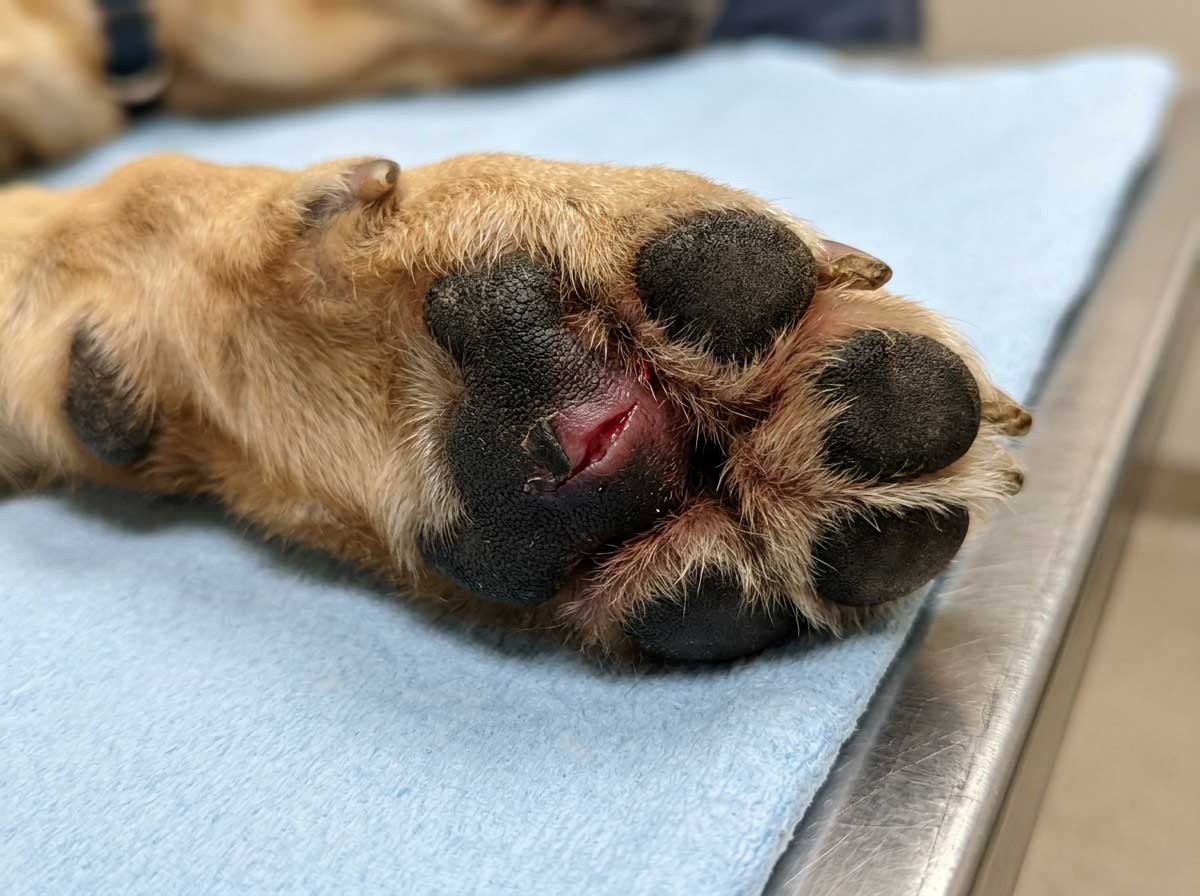
Once the paws are in hand, the exam gets more specific. The veterinarian spreads the toes, checks between the pads, presses gently around the nails and nail beds, and looks for redness, discharge, odor, heat, or foreign material. Grass awns, splinters, burrs, salt irritation, and small punctures can be easy to miss at home. So can pad burns from hot pavement or winter ice chemicals. Texas A&M’s guidance on paw pad care and injuries outlines how quickly these problems can turn painful.
Nails get the same careful attention. Long nails can curl, split, catch on fabric, or grow so far that they alter the angle of the toes. Broken nails are especially painful because the quick contains nerves and blood supply. In some cases, a pet that seems “dramatic” about nail handling is reacting to real pain, not stubbornness. Texas A&M also offers a useful overview of animal nail care, including why routine trimming protects comfort and mobility.
This is where a paw, nail, and foot exam becomes more than grooming. The veterinarian is checking for infection, arthritis, allergic skin disease, masses, ligament strain, and nail disorders that can signal broader health issues. In larger animals, hoof pain can become severe fast. The University of Minnesota Extension’s page on hoof abscesses in horses shows how much pressure and infection can build inside the foot when a problem is missed.
Common foot problems can look minor at first and become costly later
A cracked pad may start as a rough spot and turn into a deeper split that gets infected. One torn nail can mean bleeding, limping, sedation for safe treatment, bandaging, and repeat visits if the nail bed becomes inflamed. A small object lodged between the toes can create swelling that looks like “just licking” until your pet refuses to bear weight.
You may also be dealing with the practical side of it. Some pets panic during nail trims. Some owners have been scratched or bitten trying to inspect a sore paw. Some animals need pain control, restraint tools, or sedation to make the exam safe and humane. None of that means you failed. It means feet are sensitive, and pain changes behavior fast.
Veterinary paw and nail checks are often preventive care as much as treatment. Catching overgrown nails early is cheaper and easier than treating a torn dewclaw. Spotting pad irritation before infection sets in can save your pet days of pain. A routine general veterinarian visit can also document changes over time, which helps when a limp keeps returning.
DIY care and professional veterinary foot checks serve different purposes
| At Home | With a General Veterinarian |
|---|---|
| Look for cuts, swelling, redness, odor, and debris after walks | Assess pain, infection, gait changes, joint strain, and deeper tissue injury |
| Trim nails if your pet tolerates handling and the nails are healthy | Treat broken nails, overgrown nails, infected nail beds, and painful trims |
| Use paw balm or basic cleaning for mild dryness or dirt | Diagnose pad burns, abscesses, allergy-related inflammation, and masses |
| Monitor licking or limping for short changes | Investigate recurring symptoms and connect foot pain to larger orthopedic issues |
| Low immediate cost | Higher upfront cost, often lower risk of worsening injury and repeat complications |
Home checks matter, especially if your pet hikes, runs on hot pavement, walks on winter salt, or has fast-growing nails. Home care has limits. If your pet cries, snaps, bleeds, limps, or will not let you touch the foot, the problem has moved beyond basic observation.
Three steps help you respond before a small foot problem gets worse
1. Check paws after walks and once a week indoors. Spread the toes, look at the pads, and note any licking, odor, swelling, or nail changes. If nails click loudly on hard floors, they are usually too long.
2. Stop home trimming when there is pain or resistance. If a nail is cracked, bleeding, twisted, or partly torn, do not keep trying. If the paw is swollen or your pet jerks away sharply, avoid repeated handling that can increase fear and pain.
3. Schedule a general veterinarian visit when symptoms last more than a day or seem severe right away. Limping, persistent licking, bleeding, discharge, foul smell, sudden refusal to walk, or visible foreign material should be checked promptly. A general veterinarian can tell whether this is a simple nail trim issue, a skin problem, an injury, or something deeper in the foot.
Early foot care protects comfort, movement, and trust
When your pet is guarding a paw, the stress is real. You are trying to help, and they are trying to avoid pain. That tension builds fast. The good news is that many foot problems respond well when they are caught early. A careful exam, timely nail care, and treatment for pad or nail injuries can get your pet moving comfortably again and make future handling easier.
If your pet is licking a paw, limping, or struggling with overgrown or damaged nails, schedule a visit with a general veterinarian. Prompt care can prevent a small foot problem from becoming a painful one.